

Tails of winter and the earth waits pregnant for spring. It’s calling you as you sit on a bench and the sun is seeping grounding in your skin. There are three hundred people walking in the park.
Someone rushing on a bike, someone slowly walking through. Two couples with strollers chatting along and a baby crying. Two others with their dogs, one of them you have never seen before, he stares at the ducks who glare at the horizon looking for food by the hand of the next tourist or victim. A stranger is walking fast & smoking a cigarette. A girl with a red scarf standing by, waiting for someone. Birds chase the distance, some landing and speeding, chirping, and many more flying. Flocks of birds. There is a man in his forties sitting under a tree contemplating the sun breaking the clouds. You’d rather see the clouds breaking the sun. There’s a perfectly looking pond, a bright blue place, you can notice everything that touches it. It brings waves in slow fashion giving space to the sky, swans and geese. Making the horizon are the bridges and buildings that you’ve always seen but you never really appreciated. They stack brick, stones and cobblestones like siblings. How long have they been there? What have they held? Whose story do they tell? A leaf falls and grounds with one of those colours in a finesse that two people won’t ever describe the same. Avenues of grass and trees grow and call you.
A soft wind seems to tell you something. Someone is reading C.S. Lewis, The Four Loves. The book is open in the middle and you remember: “To love at all is to be vulnerable. Love anything, and your heart will certainly be wrung and possibly be broken.” You wonder when was the last time you felt that way? You wonder about the first time those words were read too. You turn around and you see a runner, running, struggling, a last mile, and then another one. An old lady is laughing, staring at her life partner, her friend. Is she wearing her favourite knitted sweater? Another younger woman is silent sitting over a blanket with daisies painted in white and yellow. A man comes across, hands in his pockets, thoughtful. Everyone you see moving contrasts a game of shades and lights and shades again from trees and the romance of fragile branches. A boy is excited, your heart kindles and remembers. You see someone else going sad, but no one is crying today. You look beyond and there’s a fountain making water levitate and move miles away. You remember the last time you left home. “Reach across again, here’s where heaven starts” you tell yourself singing Mumford & Sons. Your skin shivers as you see yourself from the outside contemplating you.
You’ve seen it in the sketchbook and something close to it in real life. The truth is that there are no two similar moments, no two that you see the same. That was the last time those three hundred people and animals and trees and weather were together in that park, at that moment of the day on that date. Van Gogh knew that a colour changes depending on what sits beside it. It’s also the same for you, because you won’t be that person again.
That was the last time you savoured the song like it.
That person you were with will never meet you again the same way.
Those words will be read differently next time.
Thoughts will be unrepeatable.
It’s likely that you have changed some of your beliefs since then. That was a snapshot. You carried the past then, it has been with you all the time, but you built on it now.
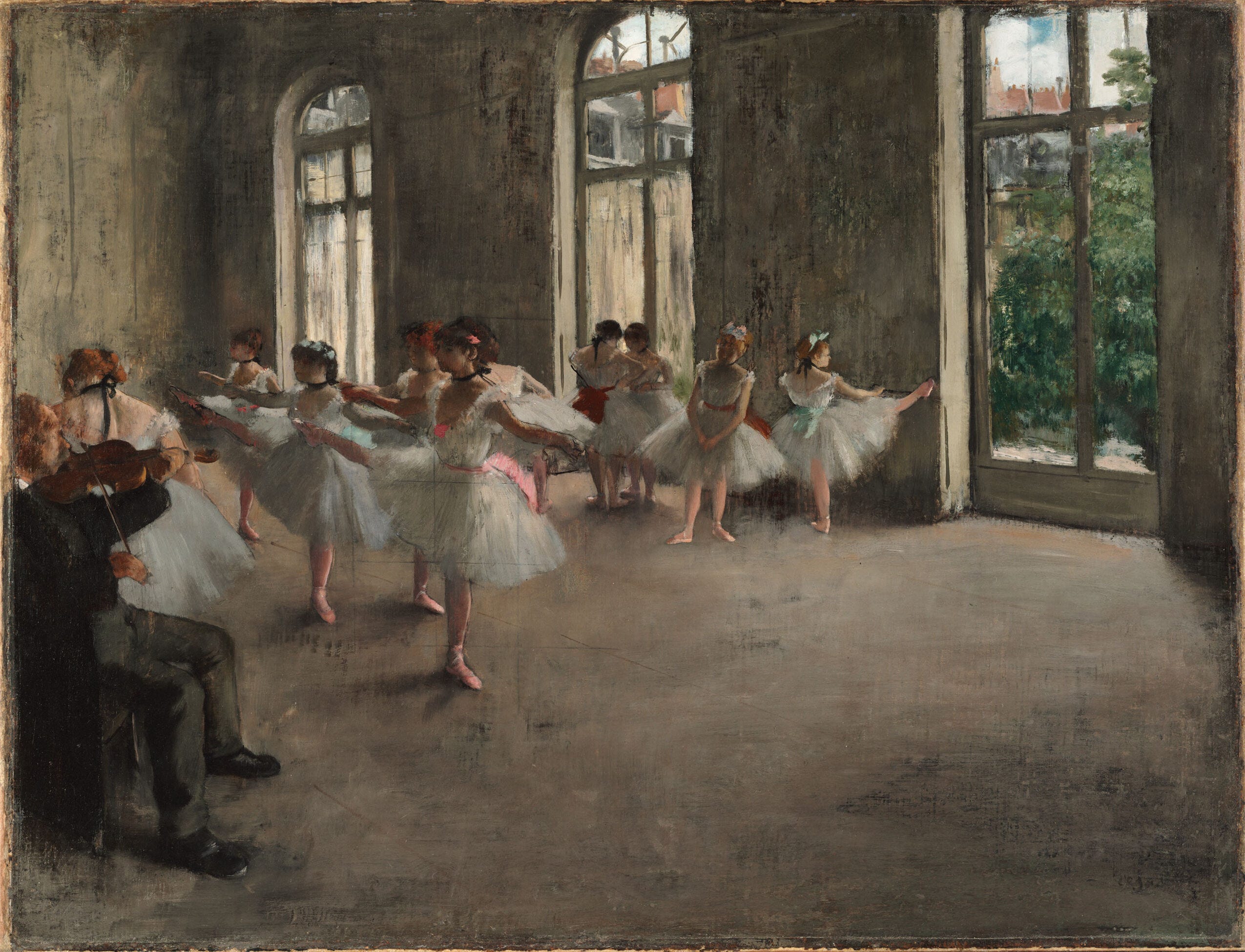
Oswald Spengler described this as “Imitation Art,” something that can’t be timeless like a painting, but rather joined in time, like going to a play and seeing a dance happen. An essence bound in place that if you don’t see it at that point, you just lost it. It was The Nutcracker bringing you to life, it was Vivaldi’s Spring 1 alive in the room. Maybe you might catch the next show, but it won’t be the same. Yes, it can be the same dancer, it can be the same orchestra, it’s the same stage, but something changed, the artist changed, the people you were with are not there anymore, you changed, everything is different.
It’s hard to accept it but we often feel the need to “certify” our experiences, as Walker Percy points in The Moviegoer. Somehow living day to day not appreciating our experiences and feeling an emptiness inside of us, undervaluing, lacking something, even to the point of leaving our neighborhoods. But if we see this place in a movie or called out by someone else, then it becomes a place possible to live. Like a person who is Somewhere and not Anywhere.
As if having them on a big screen can make us finally appreciate the present as an act of art, like a walk, a guest, a conversation, even with yourself.
The way of the artist and the way of the mystic are similar, but the mystic lacks craft. You are in the craft now, that is mystic on its own. You don’t need to “certify” it. That’s why it’s said that in moments of great joy, we are so aware that no attempt is made to compare its experience to other experiences, it is in the present and only in the present that you live.