

‘O my soul, do not aspire to immortal life, but exhaust the limits of the possible’
- Pindar
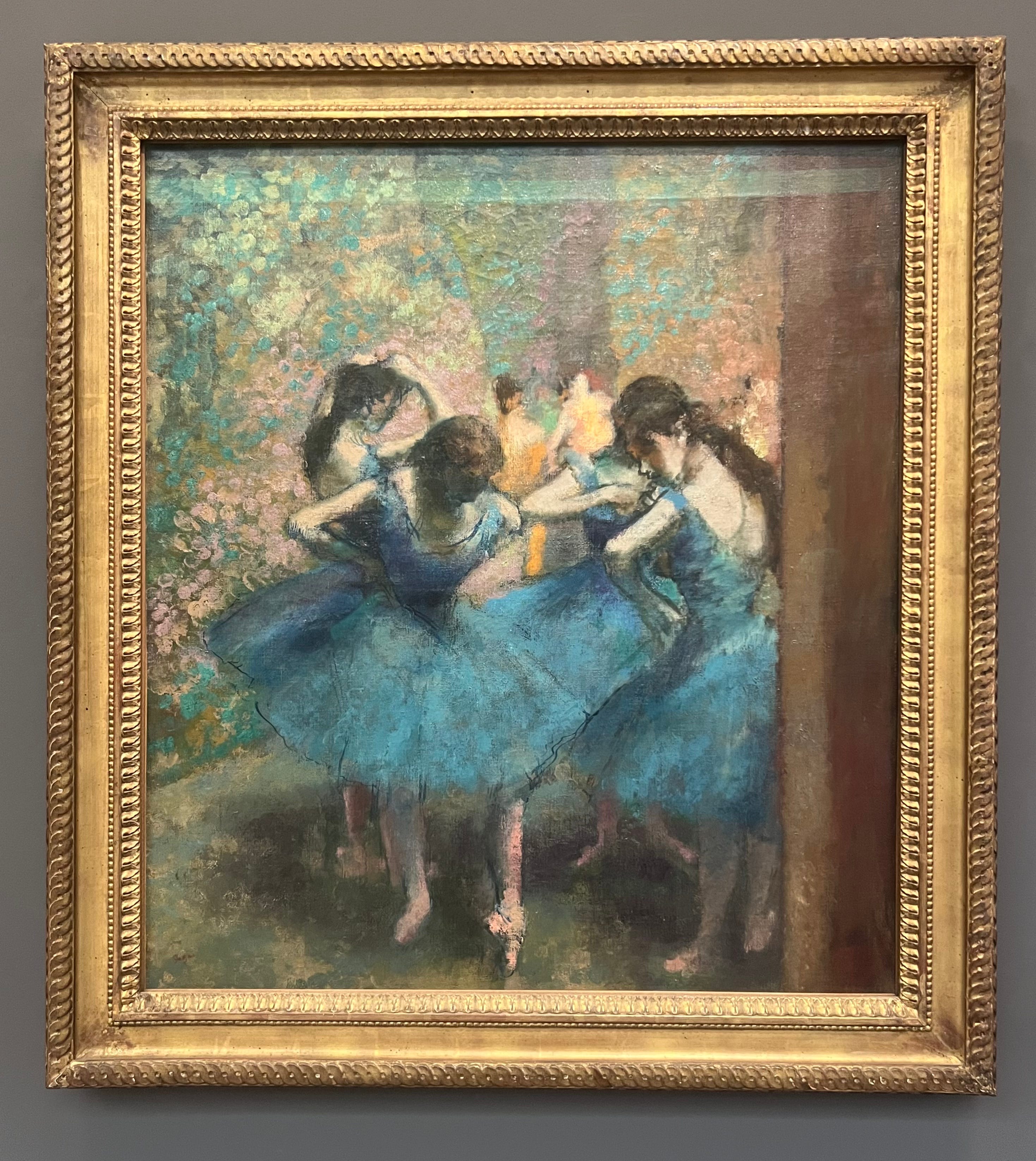
On the shortness of life, on what’s worth achieving. I once read that you should write down your dreams because they are your myths.
I also read that if you can do something that you love to do without fear of criticism, you will move. That you will find joy in it. That not another inch would be needed to feel the joy.
Is this a life well lived?
As if to advance, all your fixed ideas must go. Finding yourself again and again—heroes learn and grow from encountering their shadow, whereas villains never do.
Nirvana calls it a world that becomes a display of things from which you are disengaged, and yet, voluntarily, you can become engaged. Obsessed. Determined. The hero doesn’t finish in peace, contentment, or happiness. On the contrary, the hero continues in education.
Wandering, ‘look at the planets which light up the world: not one is at rest,’ wrote Seneca two millennia ago, ‘how silly then to imagine that the human mind which is formed of the same elements as divine beings, objects to movement and change in abode, while the divine nature finds delight and even self-preservation in continual and very rapid change.’
Wandering, ‘it’s like a tree growing,’ said Joseph Campbell more recently, ‘it doesn’t know where it’s growing next. A branch may grow out this way, then that way, and then another way. If you let it be that way and don’t have pressures from outside, when you look back, you’ll see that this will have been an organic development.’
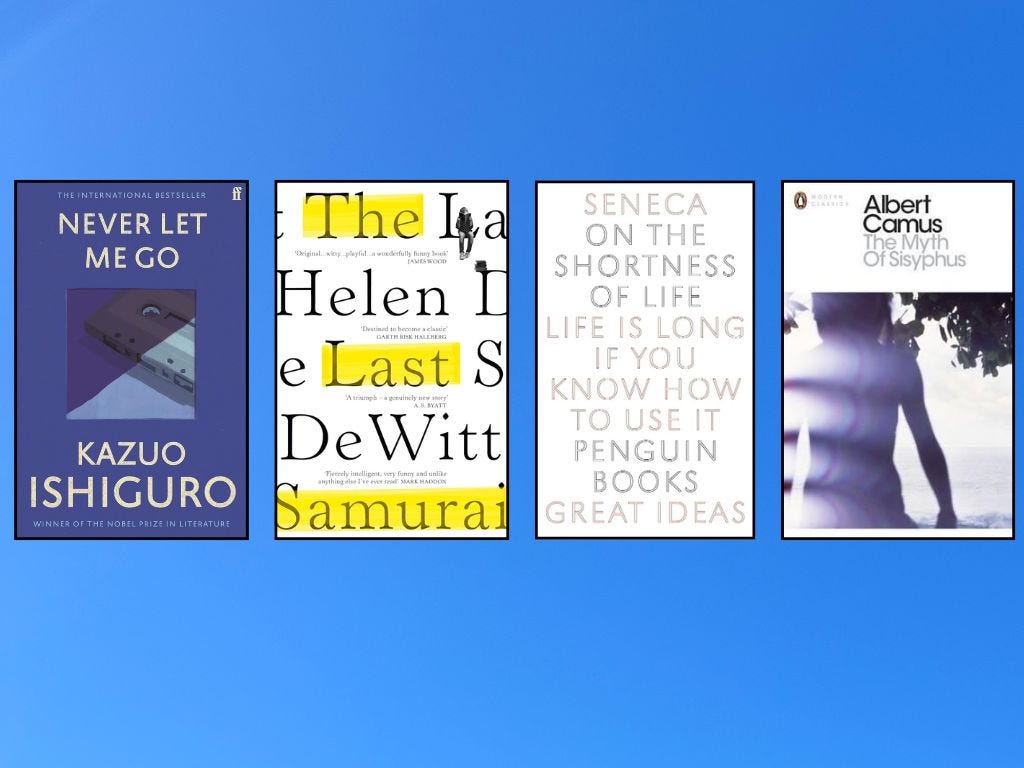
Never Let Me Go by Kazuo Ishiguro - Our sense of humanity is so common and yet so fragile. The complexity of our feelings, and our relationships—the things that really don’t require solving but we somehow, and over and over, believe they do. This novel reads like a “dear-diary” prose, narrated by Kathy, a woman who describes herself as a carer in a dystopian England and describes her coming-of-age and living the dynamics with a group of others, among them her best friend and her crush. The general feeling you get while reading is that there’s something off and not a hint of what until almost the end of the book. And while the novel is wrapped in mystery and Kathy’s thoughts in the day to day, trips through the country-side, and uncomfortable conversations, you feel as a reader so much relatedness to her feelings and the prose throughout. Existentialism runs underneath, and she asks about the ‘why?’— a sense of purpose, the feelings of love, the unbearable feelings that we are not looking for yet we can’t avoid. And on the other side, the chasing of the idea that pictures, poetry, anything you create, could maybe reveal what you were like inside…’they revealed your soul.’ I found it the most intimidating and frightening point when one of the guardians, disturbed about something, tells the young children in their playtime ‘The problem is that you’ve been told and not told. You’ve been told but none of you really understand, and I dare to say, some people are quite happy to leave it that way.’ I don’t think there’s much difference between that and our real lives, most of the time.
The Last Samurai by Helen DeWitt - ‘Everyone can imagine a life’s regret for a moment of cowardice, but you could just as easily regret a moment’s courage.’ A prodigy boy in constant search for knowledge, and a mother with a fragile past whose main purpose seems to be in surviving in a menial job. They both have the immutable tradition of spending time watching Kurosawa’s Seven Samurai. For the kid this is a view of the world. For the mother it’s the opportunity to provide not one but seven father role models that are not in their lives. The young boy learns about everything, any subject, any domain, many languages fluently, but what obsesses him the most is the one thing his mother is not willing to give him: the name of his father. In a constant search for answers, he decides to pursue this mission in secret and on his own, seeking a succession of extraordinary men, meeting each as the father he wishes he had. The boy moves from knowledge to wisdom while keeping his daunting genius nature—acting his roles out, pretending, having the courage to do it, yet bringing with it delusions, the nature of obsessions, egos, and the dark sides we hide. What I find the most fascinating about DeWitt’s writing is the constant attribution to randomness and ideas that one could imagine a prodigy mind is like. This is a novel where you find passion through its hidden treasures. You find so much value in virtues, passions, learning, and also in the heroic nature through the Samurais. And as you read you become caught in the prose and you let yourself go.
On The Shortness Of Life: Life is Long If You Know How To Use It by Seneca - ‘It is not that we have a short time to live,’ Seneca wrote, ‘but that we waste a lot of it…because this spell of time that has been given to us rushes by so swiftly and rapidly that with very few exceptions life ceases for the rest of us, just when we are getting ready for it.’ How wise is it to realise that a man who lived over two millennia ago grappled with the same mystery we still struggle with—the art of living? A book that holds a blend of wisdom, agency, meaning, love, grief, friendships, discipline, feelings, death. Seneca the Younger is one of the most famous figures of Stoicism. It is said that no one has written more cogently and relatably about the struggles of a human being so early in history than he did. Born in Córdova, Spain, son of a wealthy writer known as Seneca the Elder, he spent his years to adulthood between Rome and Alexandria, to then return to Rome and serve in public office during times of paranoia and violence. The political turmoil was so great through emperor Tiberius and Caligula’s reign that, by the time of emperor Claudius, Seneca was exiled to the island of Corsica. This is where his time of reflection came through as a catalyst, and as he returned to Rome to serve as the increasingly ignored teacher and advisor for emperor Nero, for the rest of his life he would realise the value of maximising his life and expressing his knowledge in letters to friends, plays, or essays. ‘Of all the people only those are at leisure who make time for philosophy, only those are really alive,’ he writes, ‘for they not only keep a good watch over their own lifetimes, but they annex every age to theirs.’ Authors James Romm and Ryan Holiday marvel at Seneca’s range, as though one person founded Emerson’s Transcendentalism, wrote Goethe’s Faust, and served as Abraham Lincoln’s vice president. This book contains three essays: on the shortness of life, on the life of an exile (a letter to his mother), and finally on the tranquility of mind. They are some of the most meaningful writings I have read in a long time and I enjoyed every word of it as if it was written in prose for me. There is so much to relate to in this book, so many notes I took, so much to learn and keep learning when I read it again. Why? It challenges so much our perception of living to the core, as he writes that ‘learning how to live takes a whole life, and, which may surprise you more, it takes a whole life to learn how to die.’ Or how ‘you must not think a man has lived long because he has white hair and wrinkles: he has not lived long, just existed long.’
The Myth of Sisyphus by Albert Camus - ‘A man is always a prey to his truths,’ writes Camus, ‘ once he has admitted them, he cannot free himself from them.’ Truth contrary to morality is the essence of existential philosophy, and Camus points to a new core with his concept of absurdism. In Greek mythology, Sisyphus is a trickster who scorns the gods, and turns to hate death, finally ignoring it, and living a passionate life that he doesn’t want to abandon. Sisyphus then receives eternal punishment by the gods by ceaselessly rolling a rock to the top of a mountain, whence the stone would fall back of its own weight. Camus compares Sisyphus with ‘the workman of today,’ who ‘works every day in his life at the same tasks and this fate is no less absurd,’ he says, ‘but it is tragic only at the rare moments when he becomes conscious.’ In that hour, Camus says, in which Sisyphus returns as surely as his suffering to the foot of the mountain, he feels free, superior to his fate, stronger than the rock—that’s the hour of consciousness. Camus defines him as the absurd man, arguing that his whole being is exerted towards accomplishing nothing, but knowing the difference between ignorant routine and rebellious repetition, walking the middle path, where intelligence and passion mingle and delight each other, discovering the discipline that will make the most of the absurd man’s strengths. What to make of this remains for each of us to decide. This is a remarkable book that I’ll keep on a loop to return to every year, it’s such a rich and daring answer to our ordinary lives. In his essay, he points out how ‘man’s fate henceforth assumes its meaning.’ Recognising the limits of reason and our existence, Camus argues that suicide is not an option, but rather to challenge and experience the world anew every second with the life we have. ‘To two men living the same number of years, the world always provides the same sum of experience,’ he argues, ‘it is up to us to be conscious of them.’ Being aware of one’s life, one’s revolt, one’s freedom, and living to the maximum—that’s what Camus argues for. In that line, he points to our lessons from the Greeks, saying that we should only save our admission of ignorance, the rejection of fanaticism, the limits of the world and of man, the beloved face, and finally beauty. I think that if we live by that statement we can reach further in the art of living than many. ‘I am not seeking what is universal,’ Camus says, ‘but what is true. The two may well not coincide.’
As usual, I’d love to hear your thoughts on these ideas. The best books you can read come to you through word of mouth, so if you know good titles that relate, please share them! If any of these resonate with you, pass them along.