

In 1965, William F. Buckley Jr, the father of modern conservatism in America, met with James Baldwin in a debate that marked a contrast in the civil rights movement, on the motion ‘The American dream has been achieved at the expense of the American Negro.’ The debate came a year after the Civil Rights Act, bringing a reform that was already bypassing further freedoms with repression and police brutality in the country where black people have been enslaved for longer than they have been free.
“I picked the cotton, and I carried to market, and I built the railroads, under someone else’s whip, for nothing,” said Baldwin, arguing that power in Washington was created by “my labour and my sweat, and the violation of my women and the murder of my children.” Buckley then replied “What in fact shall we do about it?” He said let us move on, let us pursue pragmatic politics—his argument was that black people must avoid the “kind of cynicism, the kind of despair, the kind of iconoclasm” that Baldwin claims, because it promotes black anger, which is met with white violence.
But wasn’t Baldwin’s approach right? Should communities remind themselves of the injustices and the plunder? Milan Kundera better stated it as “the struggle of men against power is the struggle of memory against forgetting.”
Anger can be a fuel, an ethical argument, a reason to unite, the need for a change, a transformation. Could it also be a good catalyst against power and racism? What about the anger of other peoples, often described as ethnocides in history, and more recently? People who face displacement, occupation, or cultural erasure from a higher power? So many abuses, so much indifference—in Upton Sinclair’s words, “It’s very hard to get someone to understand something that their salary depends on them not understanding.”
But anger can be so easily unleashed—leading us to envy, greed, lies, and revenge. Anger can confuse activism with extremism, like a fire unchecked, consuming everything in between. In psychology there’s this concept called “moral injury,” where ex-soldiers make sense of wartime and the transgressive things they had to do, violating their core moral values and their own humanity. But when this moral question is unresolved, it could entrench narratives that no longer work for us. An eye for an eye that could waste relationships or our own dreams.
Anger breeds when someone acts for their own interest, hurting others on the way. Socrates described the tyrant who, however many armies he commands, is powerless because he does not understand what he is doing. Socrates pointed out that to do wrong is always a greater misfortune than to suffer wrong, saying that “nature will never permit a bad man to injure one who is good.” Following this logic, the best way to deal with injustice is with fair punishment—to cure evil or improve the wrongdoer’s character.
Yes, we should build awareness and deal with injustice. Yes, we should prosecute. Yes we should realise how to deal better with our anger. This is why a reflective man can make an uncomfortable prosecutor. By training, he tends to see the other side and give it equal weight and fairness, understanding his own character and emotions, and how to use them. Seneca suggested using restraint, making the analogy that just as a good doctor seeks the least aggressive cure, a leader should use the gentlest method of correction.
After all, total peace against strong power doesn’t fit the purpose, but could be used differently. In one of the greatest examples in recent history, Gandhi started leading non-violent protests and civil disobedience movements in India against British rule, finally winning their independence.
James Baldwin reminded us that the history of America is the history of black people in America, and that in order to grow the nation, they all must play a role in it. The task is to see what unchecked power does wrong and build the opposite: something more balanced and collective. In any cause we chase, the discipline is the same: do not do wrong. This is one of the themes of our reading list for October.
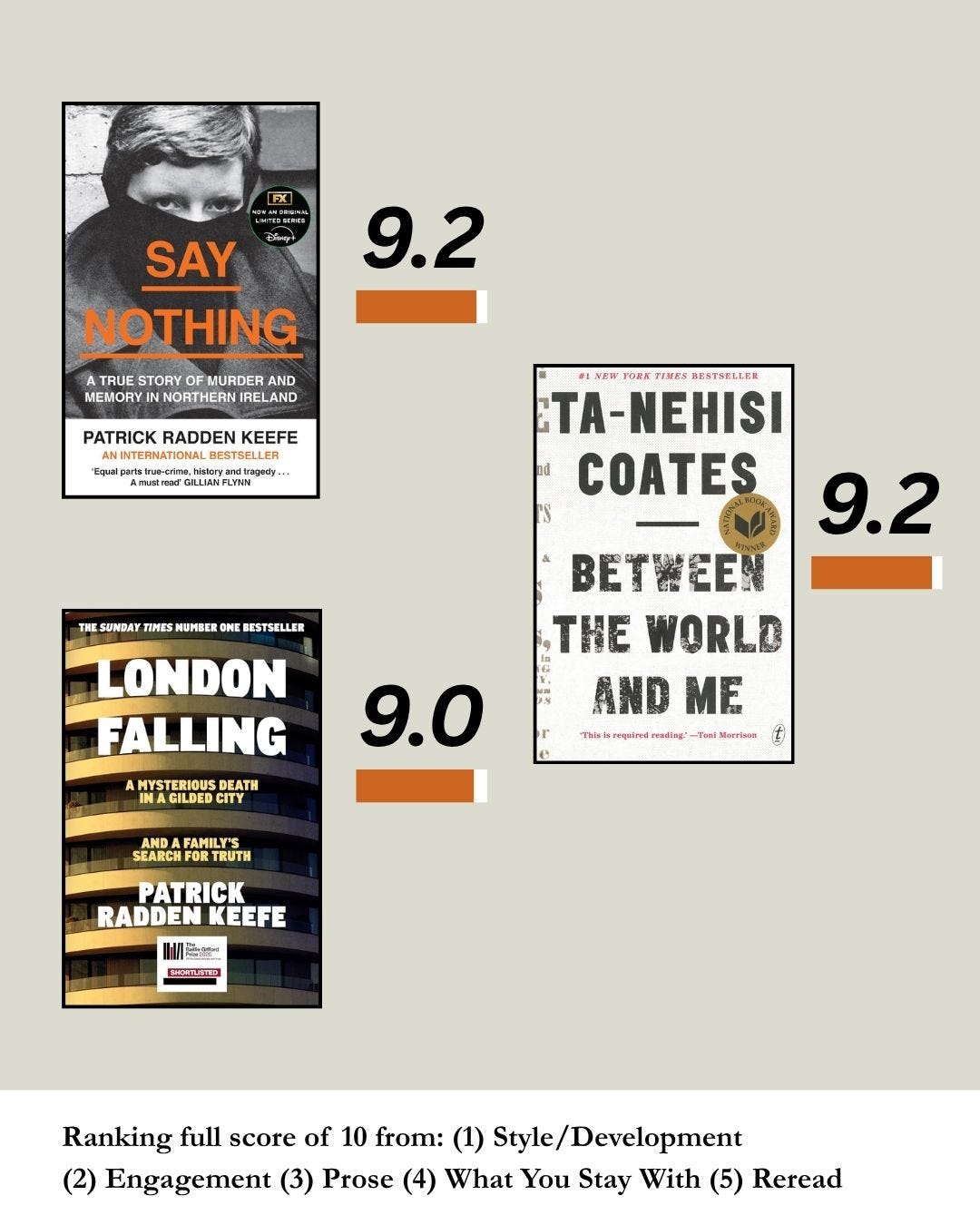
Say Nothing by Patrick Radden Keefe - This book sums up a significant part of Britain’s fragile identity and its modern colonising history. In 1921, the Irish War of Independence led to the partition of Ireland in two. In the north, six counties continued to be ruled by the United Kingdom. Catholics, who represented a majority on the island but a minority in Northern Ireland, felt that they were discriminated against by the Protestants. At Belfast, centuries of religious tension turned to systemic discrimination and one of the most extreme sectarian conflicts of the 20th century. It started with the Irish Republican Army and factions with different claims, then it turned to lethal factions within factions. Bombing everywhere in their own city, their own communities, and even further away in London, just to bring the cause forward. Years of underground communities and armies turning to each other, bringing massive displacement between Irish communities, with the remaining kids that would scuttle outside and crawl through the skeletons of burned-out rubble. Keefe starts by narrating this book with the story of the abduction of Jean McConville, a mother of ten, taken from her home in Belfast and never seen alive again, another broken family because of this conflict, and the story of some of the critical players, like Gerry Adams and Dolours Price, who changed Northern Ireland forever. Through a profoundly human narrative, this book takes you on an exploration about what happens when borders cause divisions in societies that didn’t need them, turning people against themselves, in disguise, ultimately carrying the weight of guilt from their own identities. One of my favourite parts of this book was understanding how the main characters and many key players of the revolution saw themselves across history like high-stakes pieces of a larger puzzle. Some of them turn unyielding, gravitating towards any mechanisms to bring justice, mostly through violence or relentless struggle, even from jail, as the most accurate way against colonial plunder. But some others saw the need to re-ignite and re-educate the tribe’s identity to something larger. Splitting like branches from what they knew at the time, deciding differently, and this book is a masterful piece of research that explains the reasons why it all came to be. In 1975 Seamus Heaney wrote a collection of poems titled ‘North’. In one of them, he wrote about the ‘Northern reticence,’ or in other words, the whole of Northern Ireland keeping their thoughts to themselves, ‘where to be saved you only must save face, And whatever you say, you say nothing.’
London Falling by Patrick Radden Keefe - I can tell that there are two versions of my perspective of London and reading this book made the split. I marked the line by understanding the dangerous fake of social circles, high-end places, and appearances that could perfectly turn us into confusion, or corruption. Keefe writes the story of the mysteries behind the death of Zac Brettler, a 19-year-old who died in unexplained circumstances after a fall from a building facing the Thames, surrounded by an illusion of safety. As anyone at that age driven by ambition, Zac faced bold decisions but sadly was surrounded by the wrong guides and even worse influences. Despite the fact that he had a close and supportive family that could help him, this book illustrates how a loving family is not everything that could save you in a city that pulls you down with its gravity. Keefe not only reconstructs a tragic death, but also describes London as a place ‘full of crooks with pretensions to legitimacy.’ Through years of decaying history and decline of solid institutions, the culture portrayed through Zac’s story is one of a place where people drastically become individuals they want to escape, fed by the validation and reckless motivation for more. This is more dangerous for adolescents who are still not sure of their own identities. Parents could perfectly have children who are not showing them the full version of who they are, as Keefe said in an interview about the book, ‘every adolescence goes through a phase where going to the dark side of the moon, what happened with Zac is that he didn’t come back.’ What’s more, the story builds more significantly after the death of Zac, showing the almost idle and underfunded activity of institutions that should validate justice: The Metropolitan Police, Britain’s National Crime Squad, National Criminal Intelligence Service, the jury system and the prison system. The due diligence from Zac’s family, looking for answers, and finding with Keefe how the backstory of each character involved turned out to be so corrupt and dangerous by the hand of the system. As a resident in this city, I had a fearful shock for the places, buildings and very close experiences that are referenced in the book, showing how vulnerable we could all be if we happen to meet the wrong people. The death of Zac happened by the end of 2019 and was forgotten in time under inefficiency and hidden actions, and one of the points I enjoyed the most of this book was how Keefe, through his own incredible research, pressing questions, and journalism piece published in The New Yorker in 2024, raised awareness and revived this case further, helping the family to gather key new pieces of information from the case. This work is a gripping read and shows the symbolism and hope of what journalism still can be.
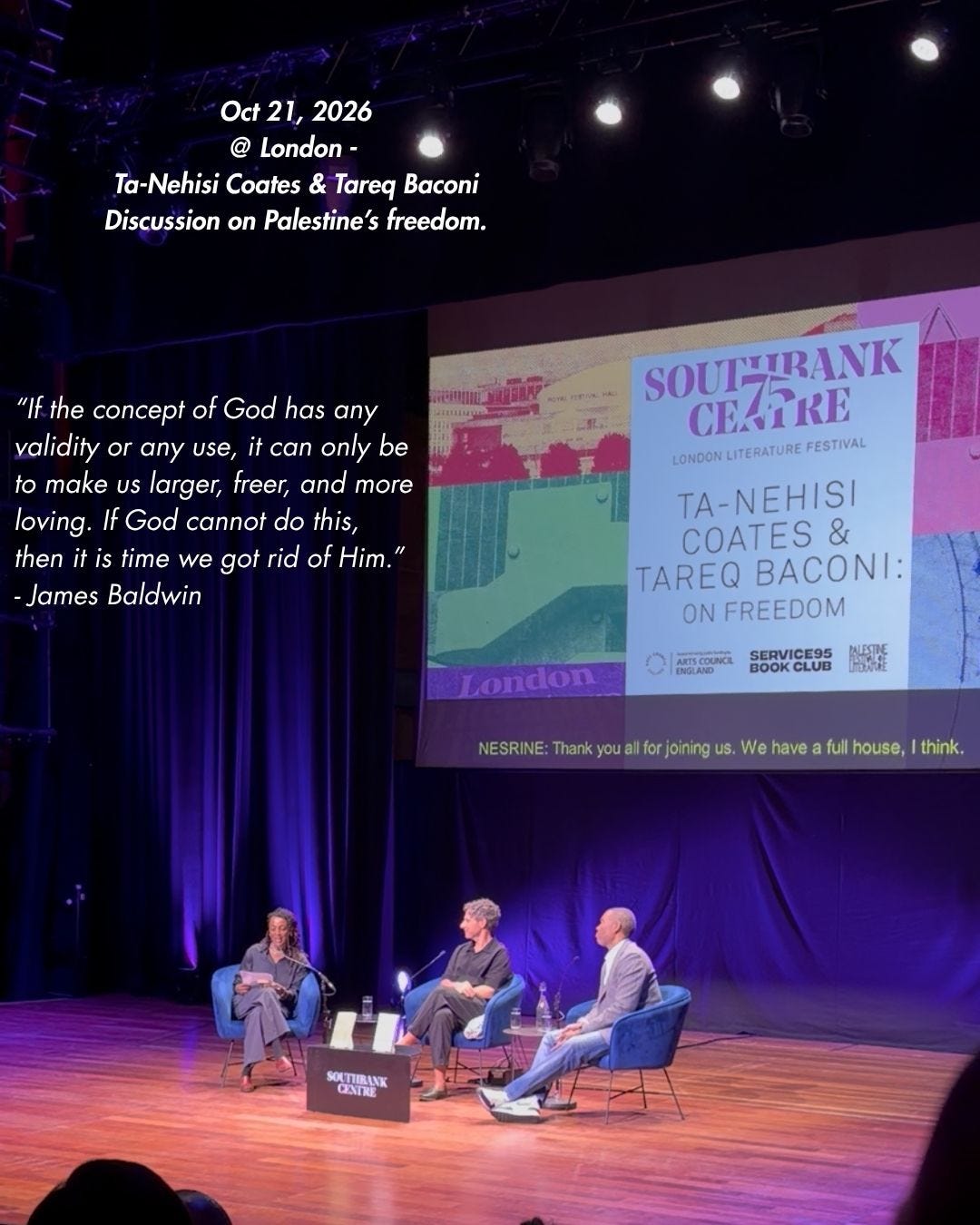
Between The World And Me by Ta-Nehisi Coates - “Race is the child of racism, not the father.” This is one of the opening lines from Coates in this book as an impassioned letter to his son, showcasing over and over the gigantic painful and ongoing failures of humanity, not between rich and poor, but more urgently, between white and black. Coates realised from a very young age how being black was already a failure in America, and in this book we follow his journey, from his parents who had the fear of raising a child in a place hostile by nature, to his grandmother teaching him the values of introspection from the very abuses that she suffered in her younger years. This book is enlightening, a must-read, an illustration to take your time reading and understand word by word through the realities of a place underneath all of us—no matter our background—where there’s extreme plundering and injustice. “Fail in the streets and the crews would catch you slipping and take your body,” describing a fragile America, “fail in the schools and you would be suspended and sent back to those same streets, where they would take your body.” What I find the most inspiring is how Coates from a young age being powerfully afraid, brought himself to also be powerfully educated. He called Howard University in Washington D.C. his Mecca—the destination—finding shelter in black leaders, books and infinite knowledge, like a light through the doorframe. And even more, in his introspection, the further he educates himself, the more he finds how his reflections on race were not solely for black in America, but also across other countries, as one African culture emigrating into other places but with the same origins, as worlds stitched into worlds like tapestry, divided by “people intent on naming us.” His argument was further broadened recently with his new book The Message, observing a direct parallel between Israel’s treatment of Palestinians in the West Bank and the racial segregation of the Jim Crow American South, describing restricted roads, ID checks, unequal access to water and basic infrastructure, and separate legal systems for Israelis and Palestinians. I had the opportunity to see him on a talk recently discussing Palestine’s Freedom with Tareq Baconi (his book here), and I found it one of the best talks of the year, reflecting on the theme and rhetoric behind what they describe as an ethnocide. In the book, there’s a powerful quote from Baldwin that I hold on to: “And have brought humanity to the edge of oblivion: because they think they are white.” Coates’ reflections read like a mission, an expression coming through painful prose where many are tired of perceiving it, and more and more realise how, even though we are powerfully afraid, we are also vastly empowered with the knowledge to do things differently. “I did not want to raise you in fear or false memory,” writes Coates in the letter, “...what I wanted for you was to grow into consciousness. I resolved to hide nothing from you… Part of me thinks that your very vulnerability brings you closer to the meaning of life, just as for others, the quest to believe oneself white divides them from it.”
As usual, I’d love to hear your thoughts on these ideas. The best books you can read come to you through word of mouth, so if you know good titles that relate, please share them! If any of these resonate with you, pass them along.